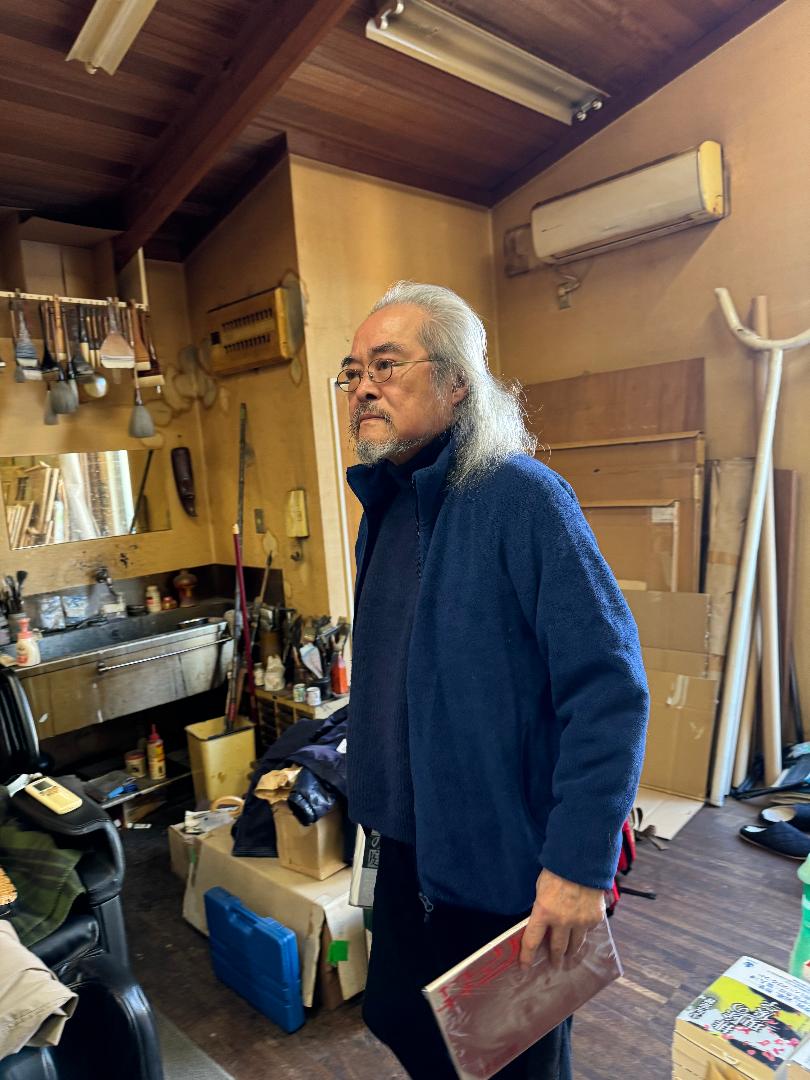
Born in 1947, in the immediate aftermath of World War II, Hori Kosai belongs to a generation shaped by the political and cultural upheavals of the late 1960s, notably the events of May 1968 in Paris. Unlike the pioneering members of Japan’s GUTAI movement – whose activities in the 1950s and 1960s redefined the Japanese avant-garde – Hori emerged from a different moment in history, one marked by reflection, resistance, and a desire to reframe artistic expression.
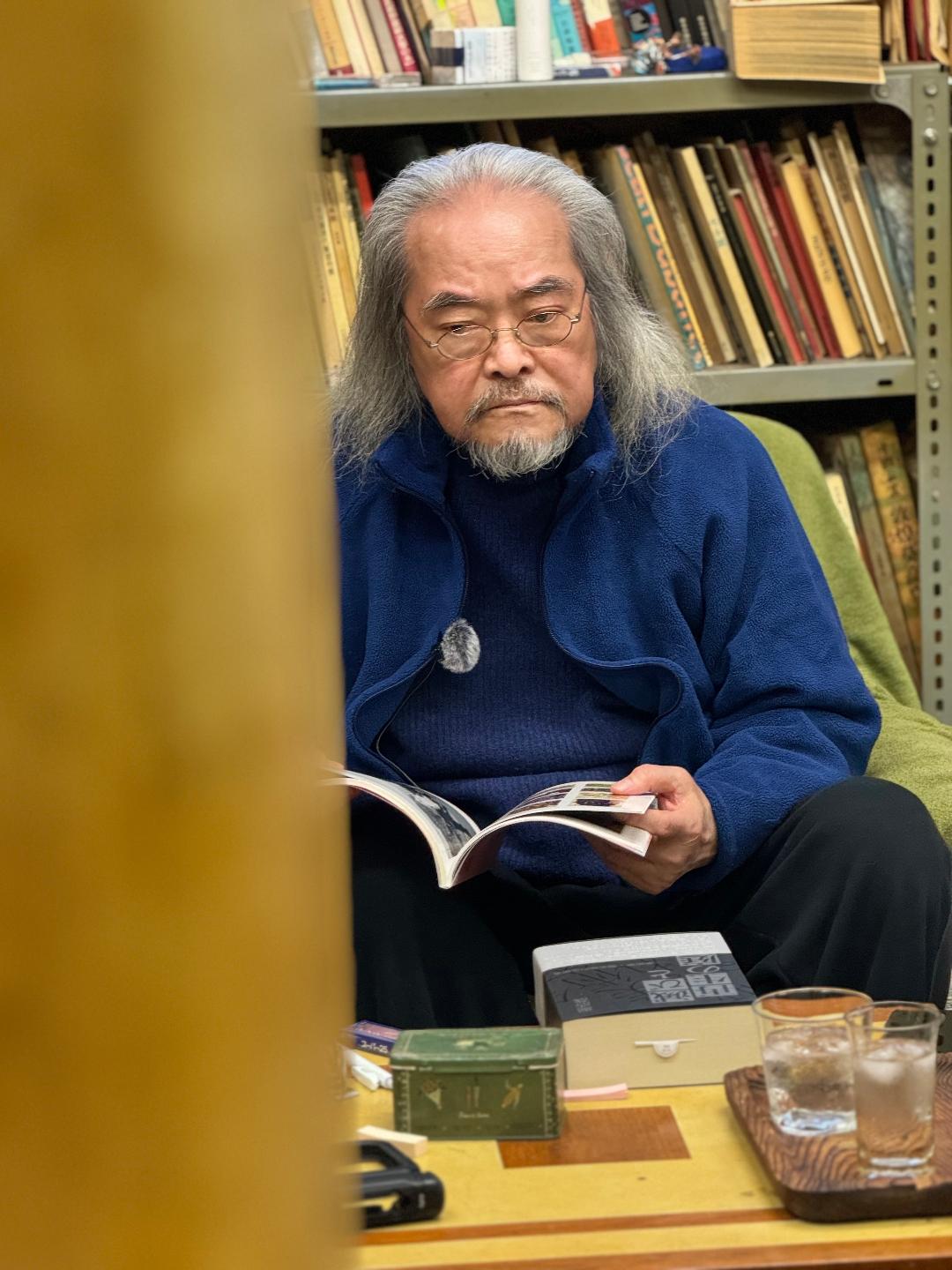
Throughout his career, Hori has consistently rejected the frameworks of localism, globalism, and even glocalism. In his view, an artist is inescapably born into a specific time and place, circumstances that lie beyond personal will. He argues that it is only through a deep understanding of these uncontrollable conditions – the artist, the period, and the place – that one can approach universal truth. For Hori, this realisation began in 1965, a formative moment in his life that, though not actively sought, became a cornerstone of his artistic identity. It was through embracing this unique convergence of time and circumstance that he found his path, developing what he calls a “rediscovered painting” grounded in individuality and temporal specificity.
Hori began his practice at a time of intense social unrest – an era that demanded the re-evaluation of systems, institutions, and ideologies, including art itself. As a founding member of Bikyōtō, the Artists’ Joint Struggle Council aligned with the Revolution Committee, he became known for his sharp, uncompromising critique of painting. His reflections, both spoken and written, continue to resonate as expressions of rebellion woven into the broader narrative of art history.
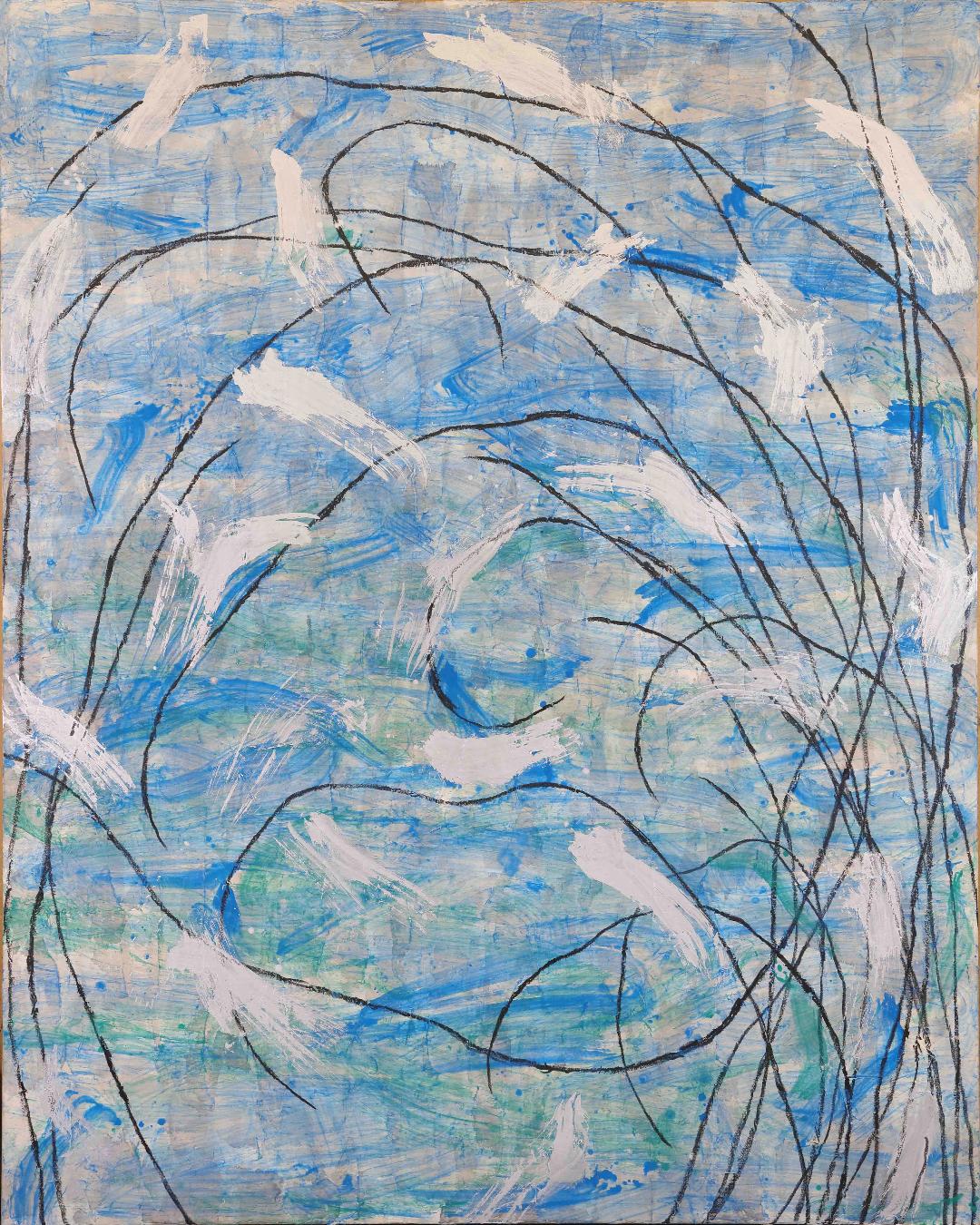
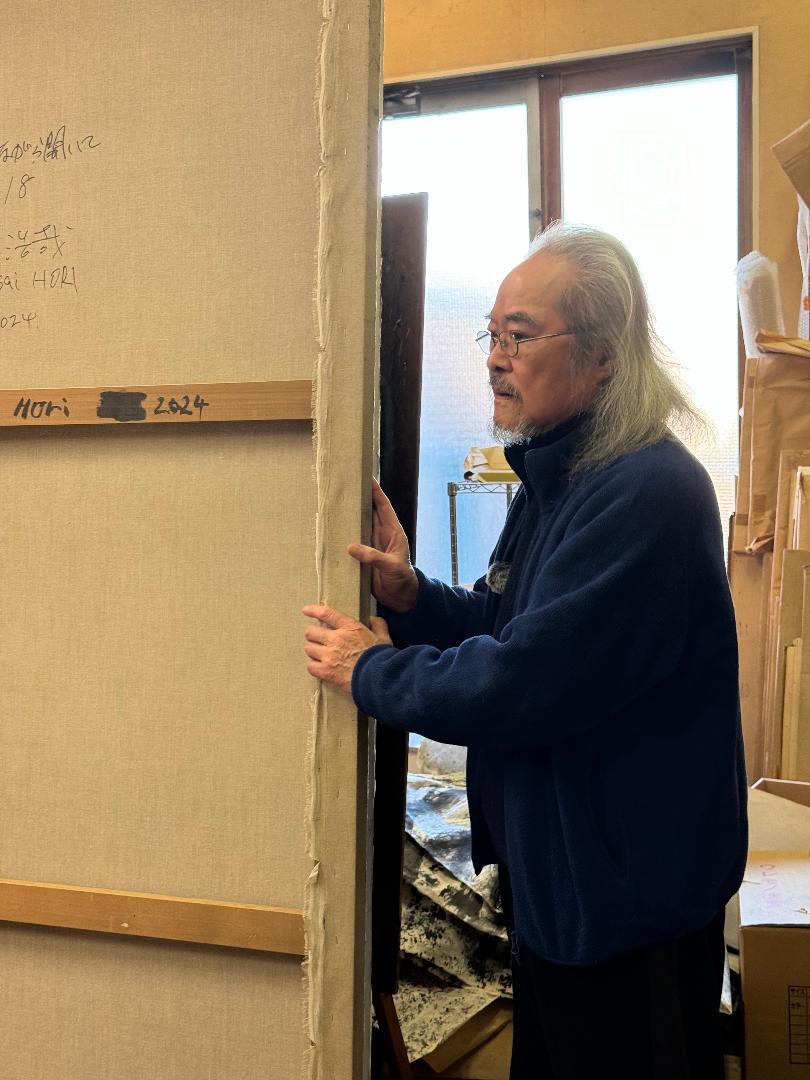
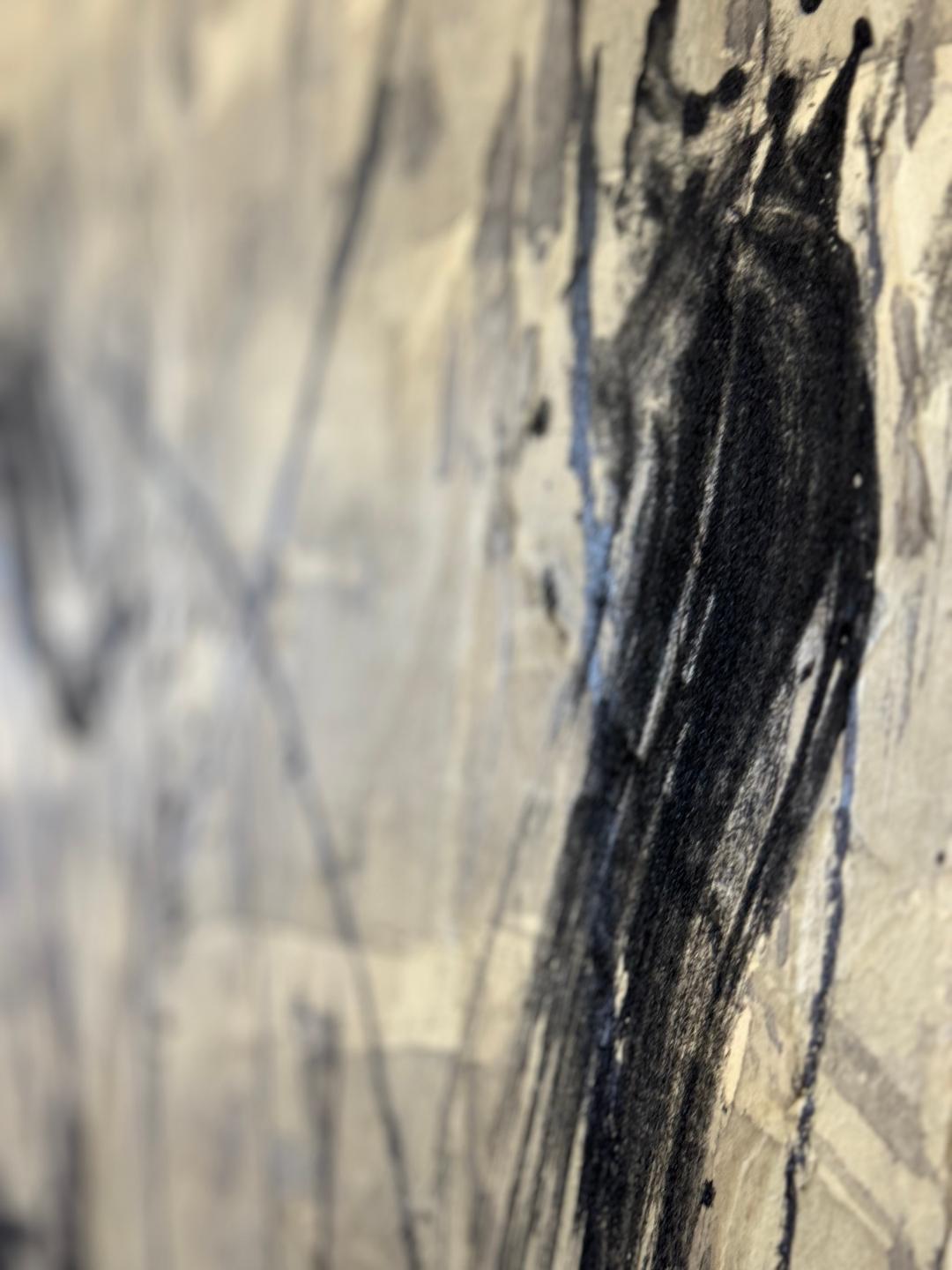
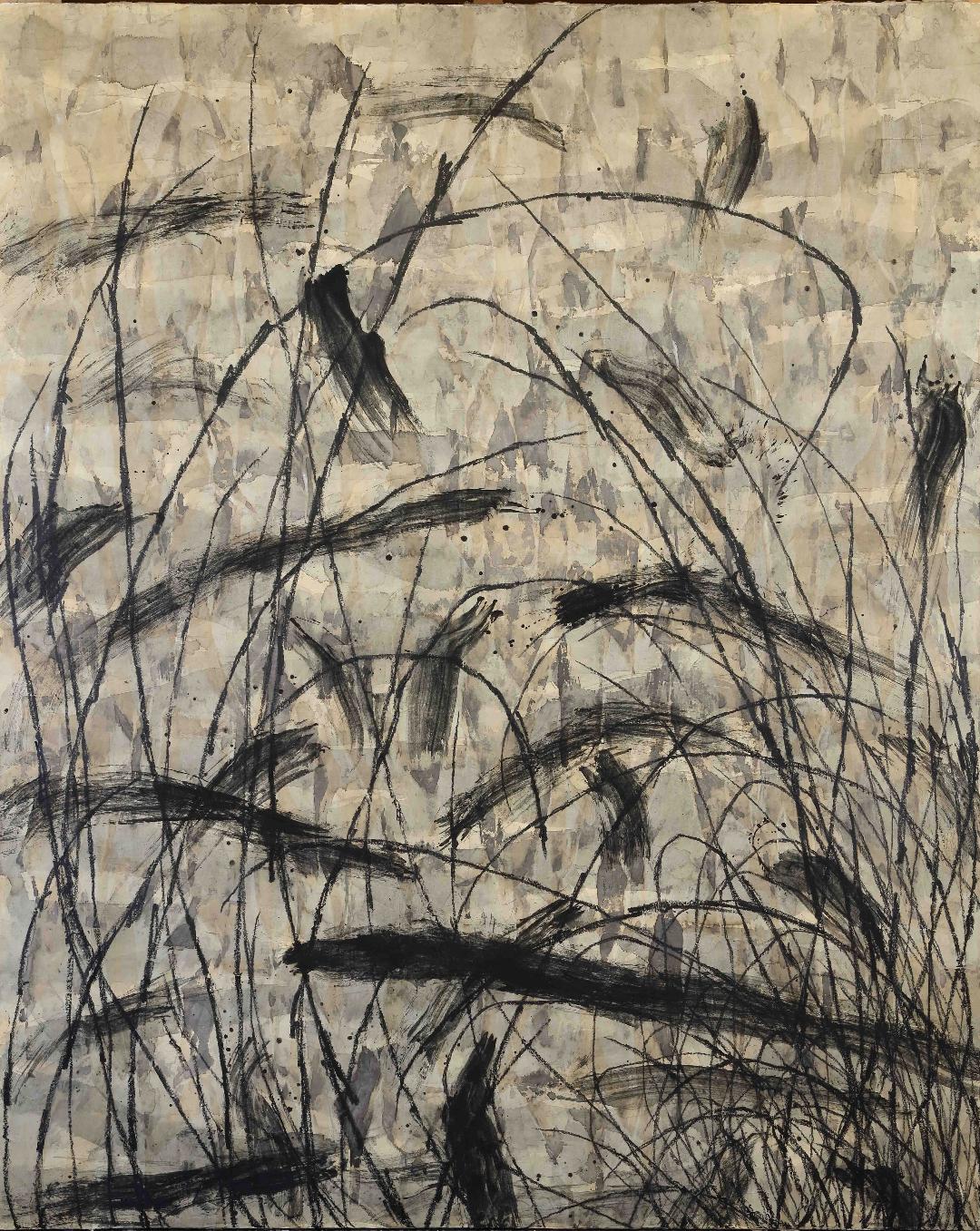
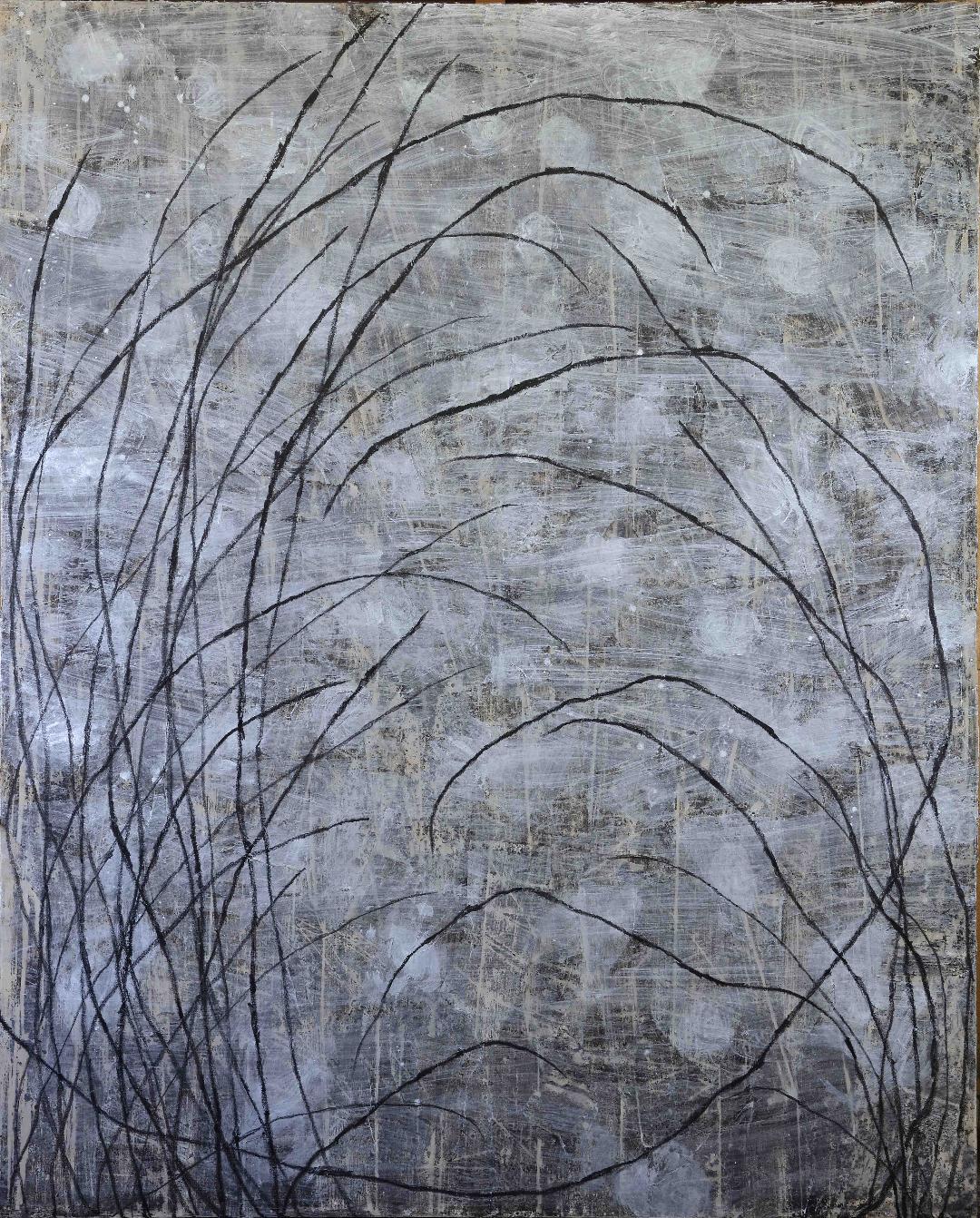
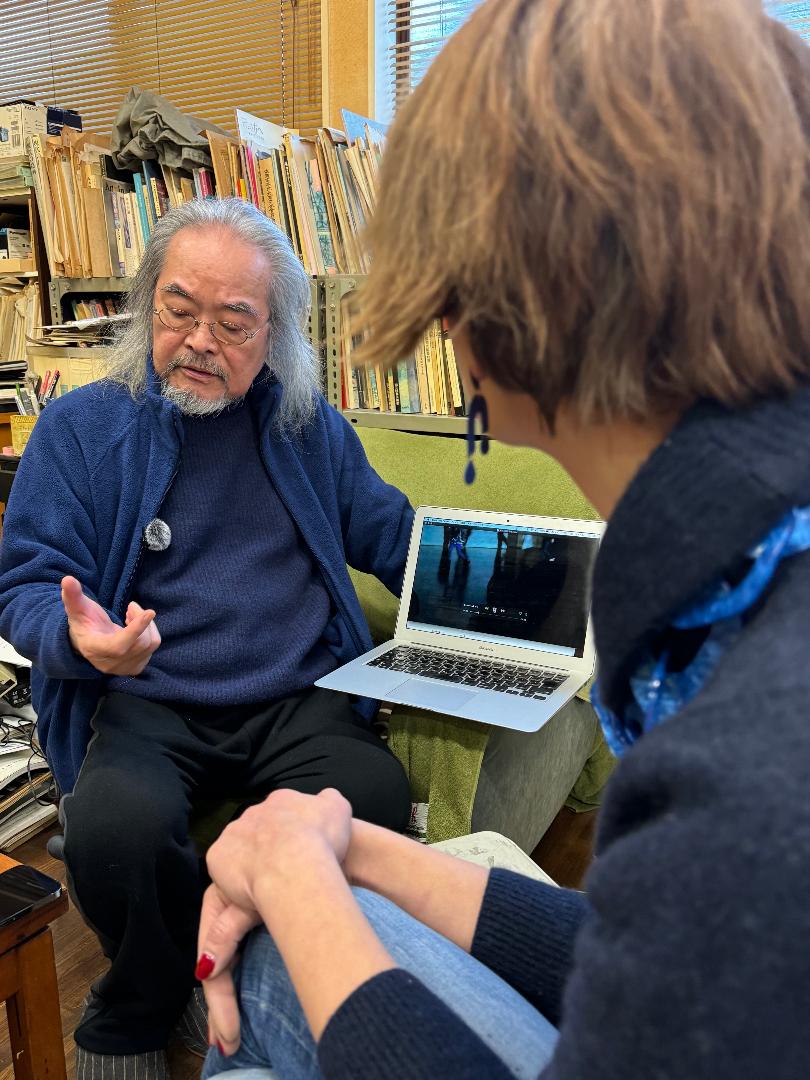
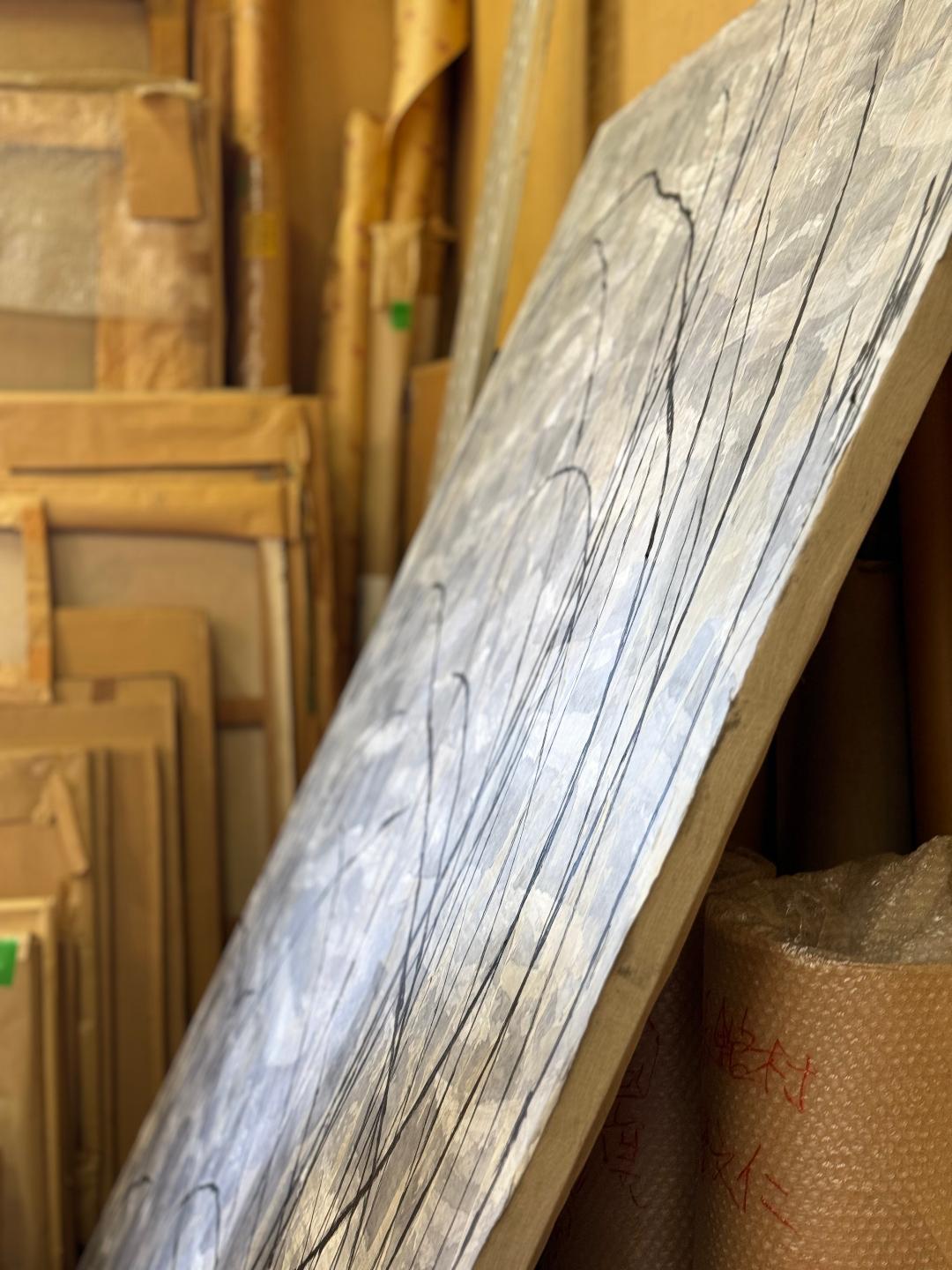
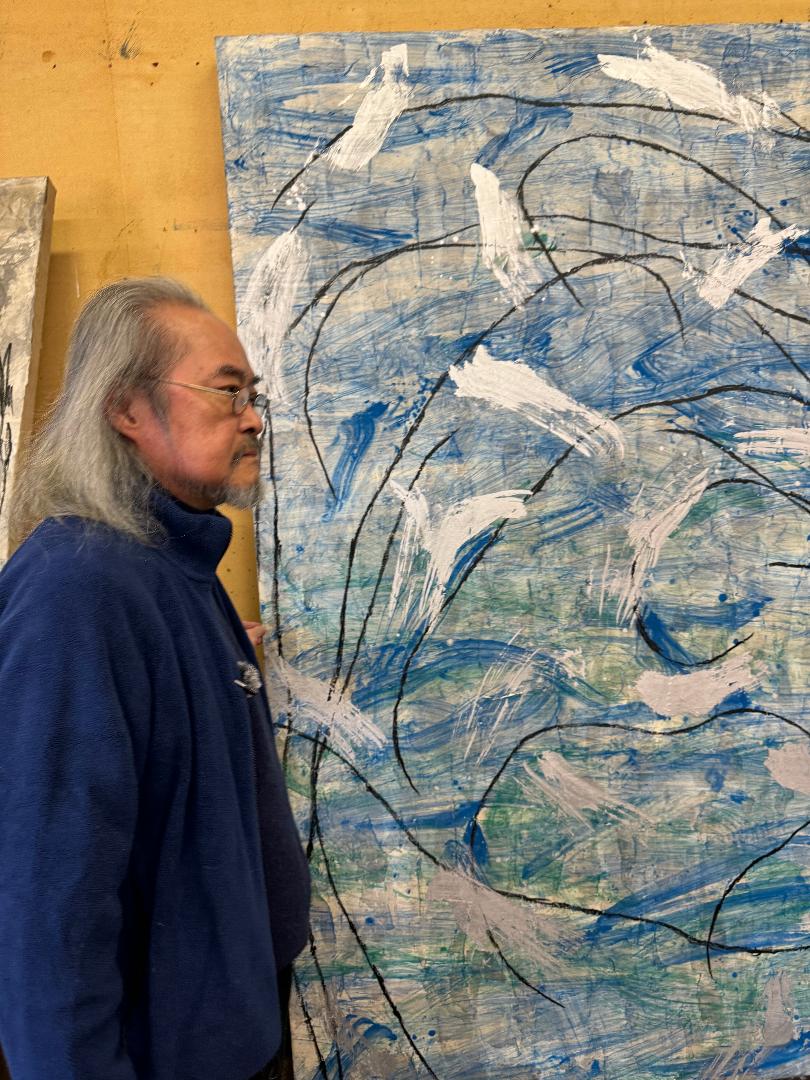
When we met for this conversation, Hori surprised me by beginning not with the past, but with his most recent work – a painting created for a solo exhibition in Europe. “For me,” he said, “the creative process begins with layering washi paper over the canvas.” Working vertically, he applies sumi ink, draws with charcoal or black markers, then lays the canvas flat to add Japanese pigments, followed by acrylics. Despite working from sketches, the final result often diverges dramatically from his initial concepts – a testament to his embrace of process and chance.
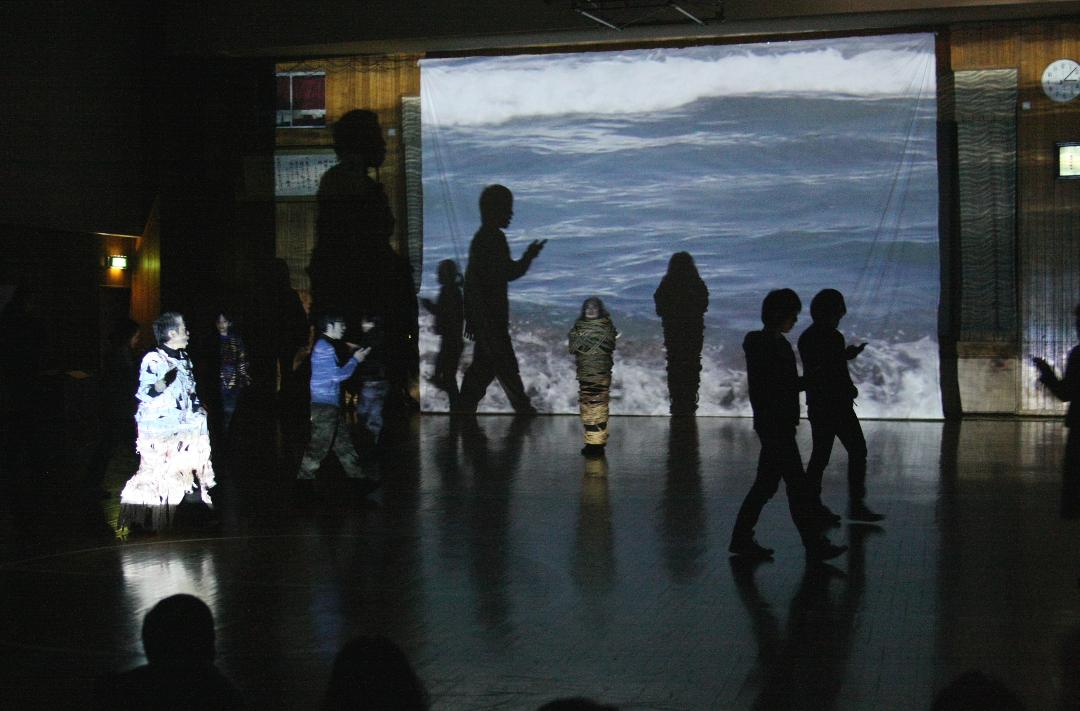
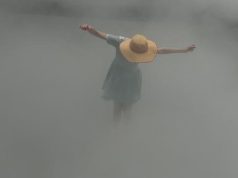
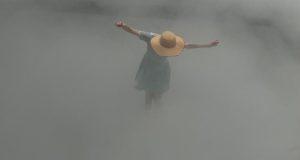
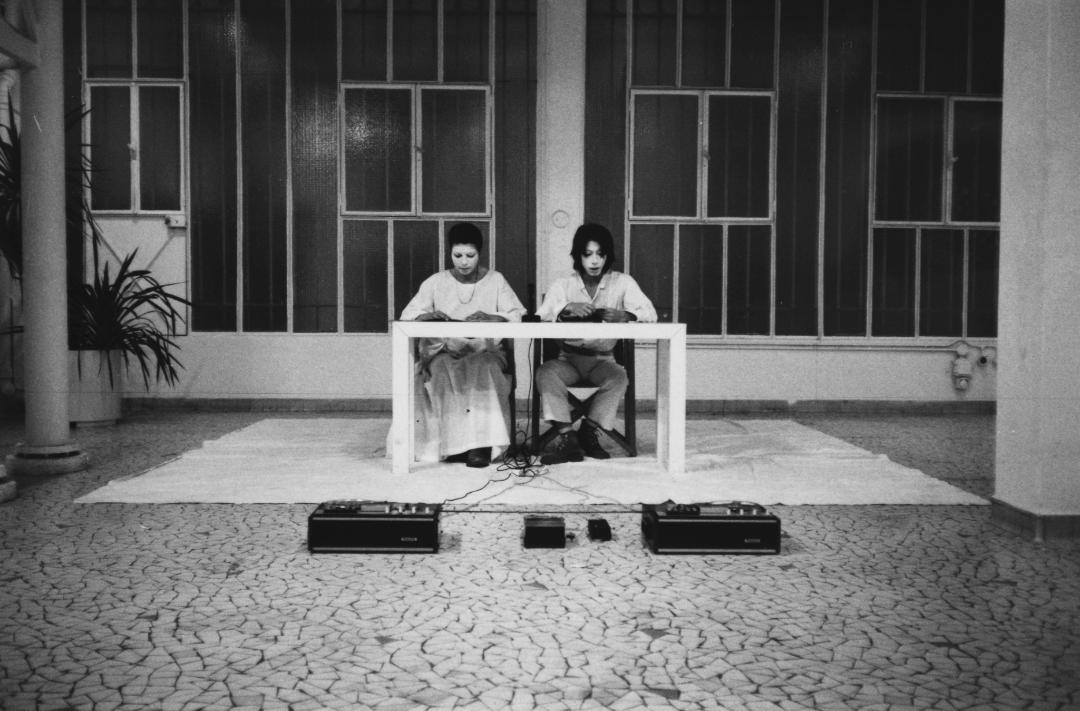
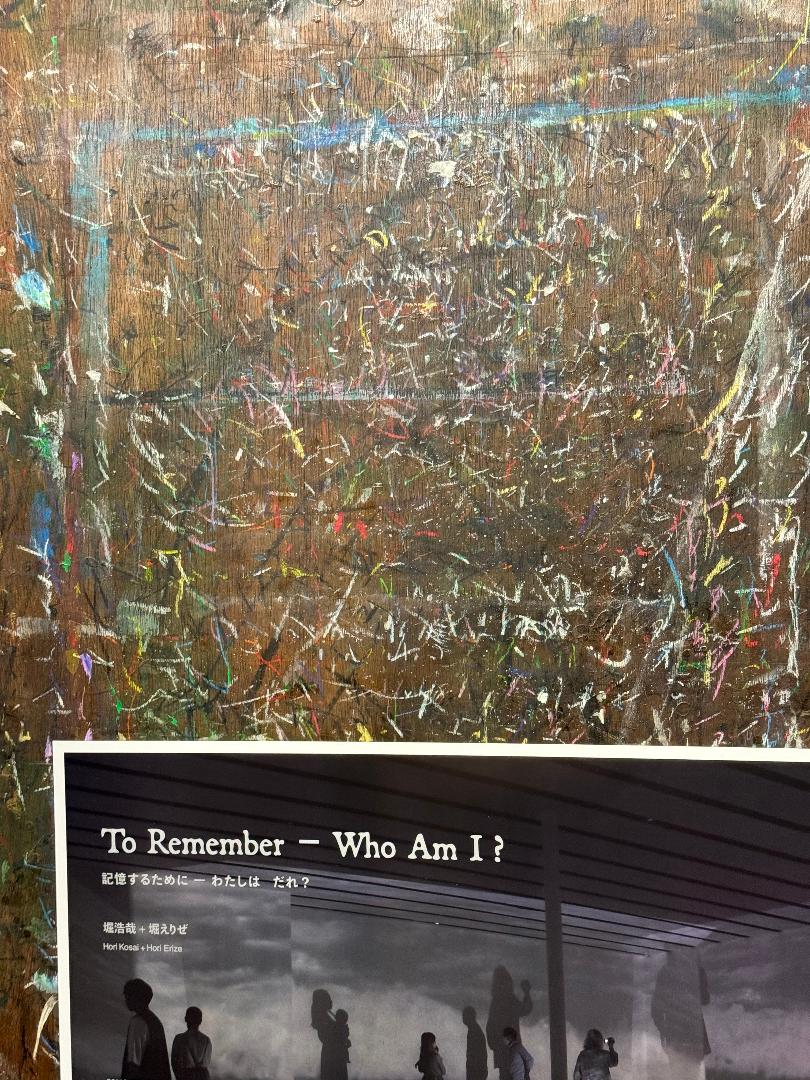
In 2011, after the Great East Japan Earthquake, Hori walked through the ruins left by the tsunami, facing an ocean that appeared serene yet concealed immense trauma. That haunting contrast inspired a series of collaborative works with artist Erize, including a powerful installation at the Maruki Gallery for the Hiroshima Panels (2019). Video projections of the ocean were accompanied by 40 speakers installed beneath the floor, playing recordings of the artists reciting the names of the victims, their voices blending with the sound of the sea. Visitors’ shadows, cast onto the projection, made it seem as though they stood within the water – silently bearing witness. “To remember, to remember…” Hori whispered throughout the piece.
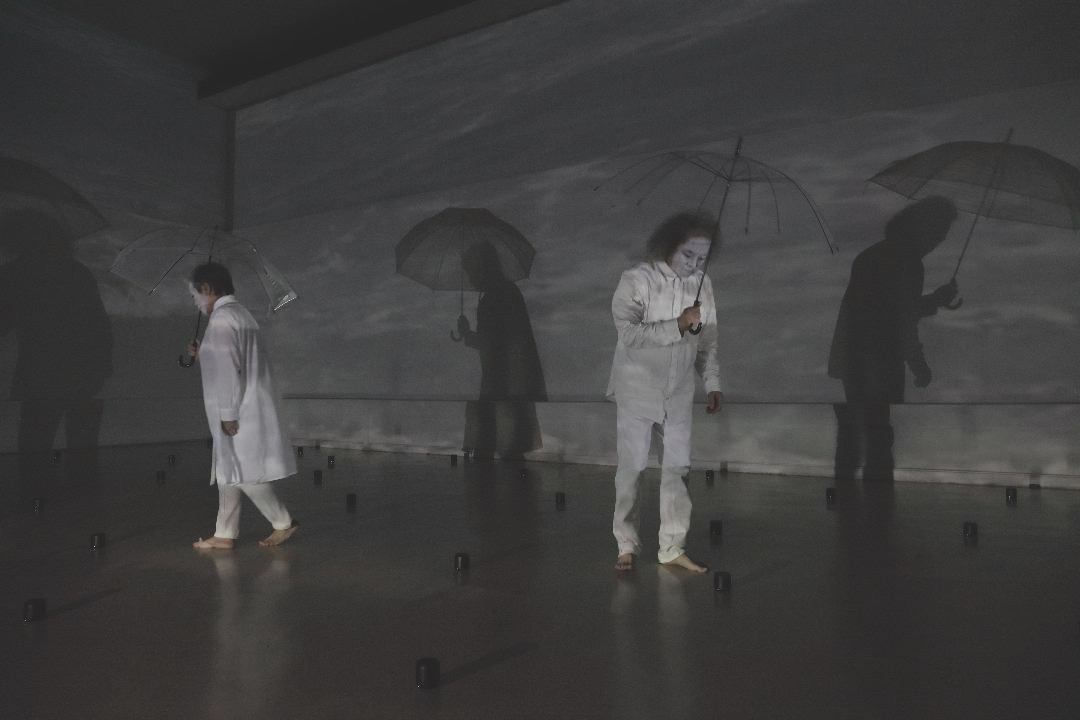
Originally staged in 2015 at 3331 Arts Chiyoda, „To Remember” explores evolving themes of memory, vulnerability, and recovery through its various iterations. In the 2015 performance, young collaborators wandered the space holding smartphones, evoking images of post-quake Tokyo, where people used their phones to navigate the darkened streets. Erize then presented a torn dress and invited the audience to participate in its repair — each person given a single needle and thread to contribute one stitch.
Since the 1960s, Hori has moved fluidly between disciplines – painting, performance, installation – while remaining unwavering in his pursuit of meaning rooted in lived experience. His art continues to confront, question, and, above all, remember.
When did you first realise you wanted to become an artist?
HK: I don’t remember the exact day, but I remember the year — I was seven years old, in second grade. In Japan, Father’s Day falls on 15 June, and its customary for children to draw portraits of their fathers. My art teacher at the time was a remarkable man — a painter himself — who often shared traditional stories with us instead of holding conventional lessons. When we finished our drawings, the teacher chose mine and praised it in front of the entire class. I admired him deeply, so his recognition meant a great deal to me. In that moment, I felt something stir. I thought, I want to become an artist. I wasn’t thinking specifically of being a painter — just an artist. That early moment of affirmation stayed with me and shaped the path I’ve followed ever since.
What did it mean to “fight” in the art world of the 1960s?
HK: Today, when people hear the word “fight,” they often associate it with violence or war. But in the 1960s, when I spoke of fighting, I meant resistance — a struggle against systems, authority, and institutionalised values. I was part of a generation influenced by the global student movements of the time, especially the events of May 1968 in Paris. For many of us, the enemy wasn’t politics in the traditional sense, but modernism and the cultural institutions that upheld it. My battlefield was not in government or activism — it was in art. I questioned the structures of the art world itself and the very definition of what constitutes art.
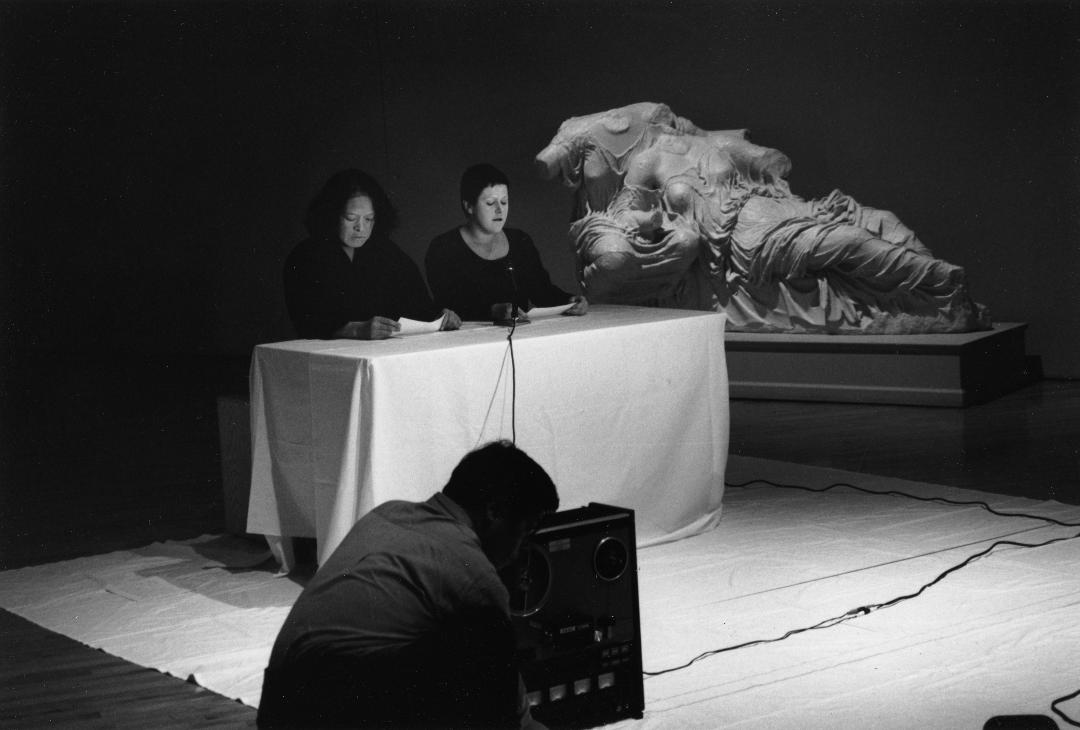
I’m still fighting. In the late 1960s, I began creating what I called Acts — early performance works that predated the formal recognition of performance art in Japan. My first official Act was presented at the 1977 Paris Biennale, where both Erize and I were invited. By then, “performance” was already institutionalised in Europe.
What I realised was this: the moment something is named — “performance,” “installation,” “painting” — it becomes part of a system. Even if you’re doing something new, the terminology frames it within established values. I continue to work with painting, one of the most traditional forms, but I aim to challenge it from within. My fight now is to push painting to its conceptual and formal limits — to approach the very edge of what it can be.
How did the artistic climate of the 1970s in Japan influence your work?
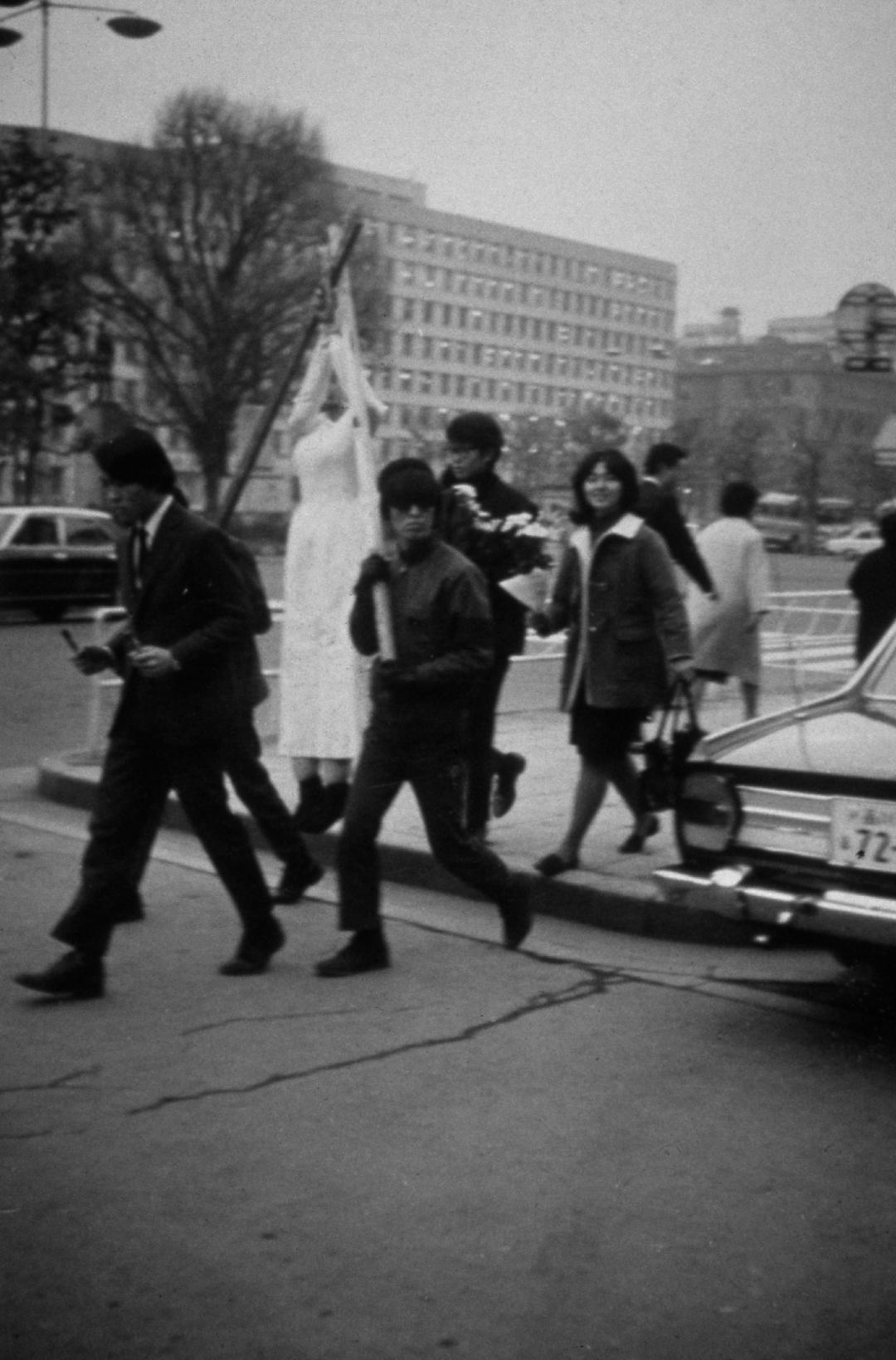
HK: In the 1970s, many artists in Japan began to question art itself — particularly in reaction to the dominance of minimalism and conceptualism. Ironically, even those who sought to move beyond modernism often ended up reinforcing it under new names. For me, it was a time to interrogate the very foundations of art. In the late ’60s, I created Self-Burial Ritual (1967) — a kind of symbolic funeral for the self. Today it might be called a performance or installation, but at the time, such categories didn’t exist. I wasn’t sure if it could even be called “art.” That uncertainty was the point — it marked the beginning of a journey to rediscover what art could be. At the end of the ’60s, while many of my peers continued painting without questioning its nature, I created Rejecting Appreciation (1969), a work composed only of wooden frames — painting in a state before painting. In the early ’70s, I experimented with abstract techniques that challenged the idea of image-making itself: whitening out photographs with crayon, producing black surfaces by silk-screening primary colours, applying pigment with thread rather than a brush. These were not simply visual exercises — they were explorations of painting before expression.
The 1970s, for me, were a decade of searching — not for style, but for the essence of art.
Why did you establish the Bikyōtō group, and what did it represent?
HK: Following the revolts of 1968, a global movement began to question the exhaustion of modern systems — not just in politics, but in education, culture, and the arts. As a student, I participated in protests that challenged not only large structures, but also everyday norms — university rules, art curricula, and unspoken institutional assumptions.
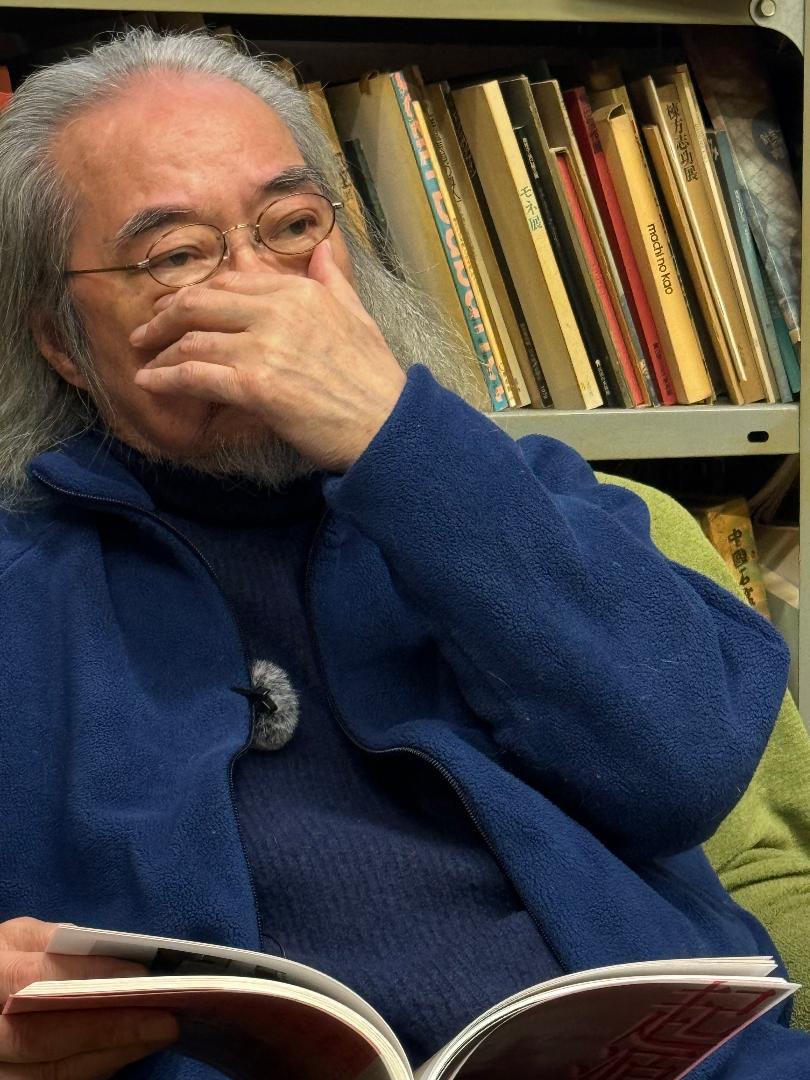
From these efforts, Bikyōtō (Artists’ Joint Struggle Council) was born. It began as a student-led initiative, but I expanded it by inviting non-student artists to join the conversation. We didn’t want to protest from the outside — we wanted to critique the institution of art from within. Eventually, the group evolved into Bikyōtō Revolution to deepen our inquiry into the essence of art itself.
It was a turbulent time. We were arrested. The movement lasted from 1969 to around 1971 and ultimately ended in defeat. But while the group dissolved, the fundamental questions we posed remain unresolved. We also published magazines and operated in a way that, in retrospect, resembles the artist collectives of today.
What did your time in Paris reveal to you about painting?
HK: I wasn’t invited to Paris as a conceptual artist, but as a performer. At that time, I was already intensely questioning what art meant. During my stay, I visited a small museum that held Monet’s late works — paintings completed when he was nearly blind.
Many describe Monet as a retinal artist, someone who painted what he saw. But these late works challenged that view. Monet clearly had a perceptual system that went beyond eyesight. Even as his vision deteriorated, he continued to paint — proving that painting could be more than visual. This discovery didn’t inspire me in a direct stylistic sense, but it unlocked something within me. I realised that painting, too, could be conceptual. That marked a turning point. After Paris, I shifted my focus away from performance and returned to painting — but with a new understanding of what painting could mean.
Can anyone become an artist?
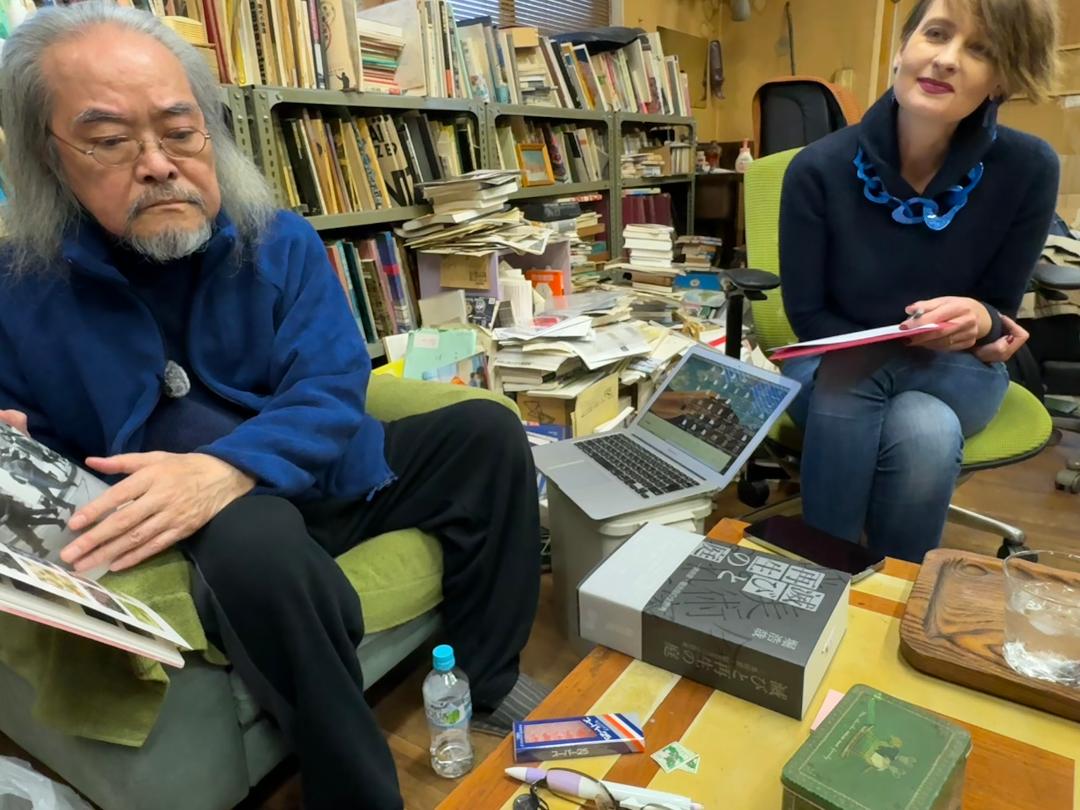
HK: The idea that “anyone can be an artist” is widely repeated, but I don’t agree with it. Yes, children can draw. Amateur painters may enjoy what they do. But being an artist is not simply about talent, creativity, or commercial success. For me, being an artist is a question of identity — and of responsibility. An artist is someone who chooses to exist within the system of art while also critically confronting it. Selling your work doesn’t make you an artist. Being skilled isn’t enough. You must be accountable to the structure of art itself. That’s where true artistic identity lies.
Who is Hori Kosai today?
HK: I have always sought to move beyond imposed boundaries. I don’t want to be confined by Japanese identity or tradition — and yet, I don’t reject it either. I accept my roots. I value them. But I also seek to challenge and transform them. I exist in an in-between space — simultaneously embracing and stepping away from Japanese culture. That tension, that ambiguity, is what defines me. And it continues to shape my work.
How do you view the impact of globalism on contemporary art?
HK: Globalism isn’t confined to art — it’s a broad, systemic process that spans culture, economics, and society. Some say we are living in an age of globalism; others speak of „glocalism,” where the global and the local intersect. Personally, I’ve never wanted to be restricted by local traditions or national identity. Globalism, to me, is a positive force — it allows for distance, for contrast, for self-reflection. It enables me to see my own culture more clearly, even critically.
However, to truly engage with the global, one must first be grounded in the local. Without roots, artistic expression risks becoming superficial — a kind of cultural simulation. You lose the essence. When artists adopt a stylised version of their heritage without depth or understanding, the result can be empty and formulaic.
Take, for example, Takashi Murakami. His work plays with imagery drawn from Japanese culture, but it often stops at the surface, producing a marketable, export-friendly version of „Japaneseness.” In contrast, I try to reach into the deeper, less commodifiable layers of local culture — the parts that resist easy packaging or global consumption. True global art begins not by abandoning one’s origins, but by confronting and fully inhabiting them.
What are your thoughts on the role of new technologies — such as AI — in contemporary art?
HK: I currently serve as a juror for a student competition organised by a Japanese publishing house, and I’ve reviewed a wide range of submissions, including works created using AI tools. I’m not opposed to AI — in fact, I actively encourage young artists to explore new technologies. When I began incorporating video into my practice in the 1960s, it was considered cutting-edge. From that personal experience, I believe artists must remain open to evolving modes of expression. Innovation in media has always been part of artistic progress. That said, the AI-generated and computer-based works I’ve encountered so far often strike me as lacking depth. They tend to skim the surface — technically proficient, but conceptually thin. The tools themselves are still new, and artists haven’t fully mastered them yet. More time is needed for these technologies to be absorbed in a meaningful way.
Importantly, I don’t see traditional media and new technology as mutually exclusive. They can and should coexist. Take painting, for example: when reproduced in books or online, its scale and materiality are lost. You can’t sense the weight of the brushstroke, the texture of the surface, or the physical presence of the work. But when you stand in front of a painting — even one you’ve seen many times in reproduction — it can still surprise you. There’s always something new to discover. This kind of embodied experience is irreplaceable. It reminds us that technology may transform the tools we use, but the core of art — its power to move and provoke — remains rooted in human perception.
You’ve taught at Tama Art University. In your view, what does it take to become an artist?
HK: During my time teaching at Tama Art University, I encountered many talented students. Those who enter are often highly skilled and full of promise. But in my experience, only about two per cent go on to become artists — at least by my definition.
We often hear the phrase “anyone can be an artist,” but the reality is different. Yes, many people can create, but only a small number truly embody what it means to live and work as an artist. As Erize-san has said, two per cent is not a limitation — it’s enough. Two per cent represents the possibility. If everyone became an artist, paradoxically, art would cease to exist. The fact that only a few succeed is not discouraging; it is a form of hope.
Talent plays a role, of course, but it’s only one part of the creative process. Even if you’re gifted, you might not actually function as an artist in the world. You need something more. Not just effort — something deeper, something harder to define.
In fact, talent can be dangerous. If you rely on it alone, you risk falling into narcissism. You become trapped within yourself, disconnected from others. Your work might remain technically impressive, but it won’t move people — it won’t resonate. That’s why I say talent is only partially important. Those who do succeed — that rare two per cent — possess something else entirely. Something beyond skill or knowledge. Something essential.
Is your work universal, or can it only be fully understood within a Japanese context?
HK: Every artist embodies a particular time and place. This doesn’t mean one is confined by local context — rather, the artist symbolises it. To truly transcend borders and speak to a wider audience, one must first root oneself in the specificity of one’s origin. Only those who can fully articulate the essence of their own time and place have the potential to push beyond it and become truly global.
Take Impressionism, for example. Monet and his contemporaries captured something fundamental about their historical moment. What they expressed was so deeply attuned to their era and environment that it eventually became universal. Their school — born of local, time-bound concerns — transformed into a global movement.
And yet, countless artists influenced by Impressionism, while technically accomplished, never reached that same global resonance. They remained within their circles, echoing a style without embodying its spirit.
In Japan, we have the genre of Yōga (洋画), or Western-style painting. Many artists within this movement were influenced by Impressionism, yet none achieved global recognition. Why? Because they adopted the style without capturing the deeper essence that made it meaningful in the first place.
This is the crux: to create art that resonates universally, one must begin by fully inhabiting and expressing the particularities of one’s own context. Only then can it rise above them.
Closing Note
Hori Kosai’s latest solo exhibition, Touching So Close and Having an Openness 2, opens on Wednesday, August 6 at Mizuma Art Gallery. This ongoing series, first initiated in 2020 in response to the global rupture brought on by the COVID-19 pandemic, has since evolved into a profound exploration of the act of painting — both as a physical gesture and as a conceptual inquiry.
As with much of Hori’s work, the title reflects a phrase that lingered with him — a quiet moment of resonance transformed into visual form. The Touching So Close and Having an Openness series captures something deeply personal, yet it also speaks to the collective emotional tenor of recent years. Introspective and quietly forceful, the works offer a meditation on intimacy, distance, and the permeability of inner and outer worlds.
The exhibition presents new canvases in a range of scales — large, medium, and small — arranged throughout the gallery space. Primary hues of red, blue, and yellow pulse beneath layered surfaces; lines flow with deliberate ease; grounds shift and shimmer beneath the painted skin. Each piece exudes a quiet conviction, suggesting an inner energy just beneath the surface, not asserted, but allowed to emerge.
This exhibition marks another chapter in Hori’s decades-long investigation into the nature of painting. It invites the viewer to slow down, to look again, and to feel their way into a space where presence and perception subtly intertwine.
All images of artworks and performances © Hori Kosai. Courtesy of the artist and Mizuma Art Gallery.